
How to Stop Overthinking — 15 Practical Ways to Calm Your Mind and Regain Control
How to Stop Overthinking – 15 Proven Ways to Calm Your Mind
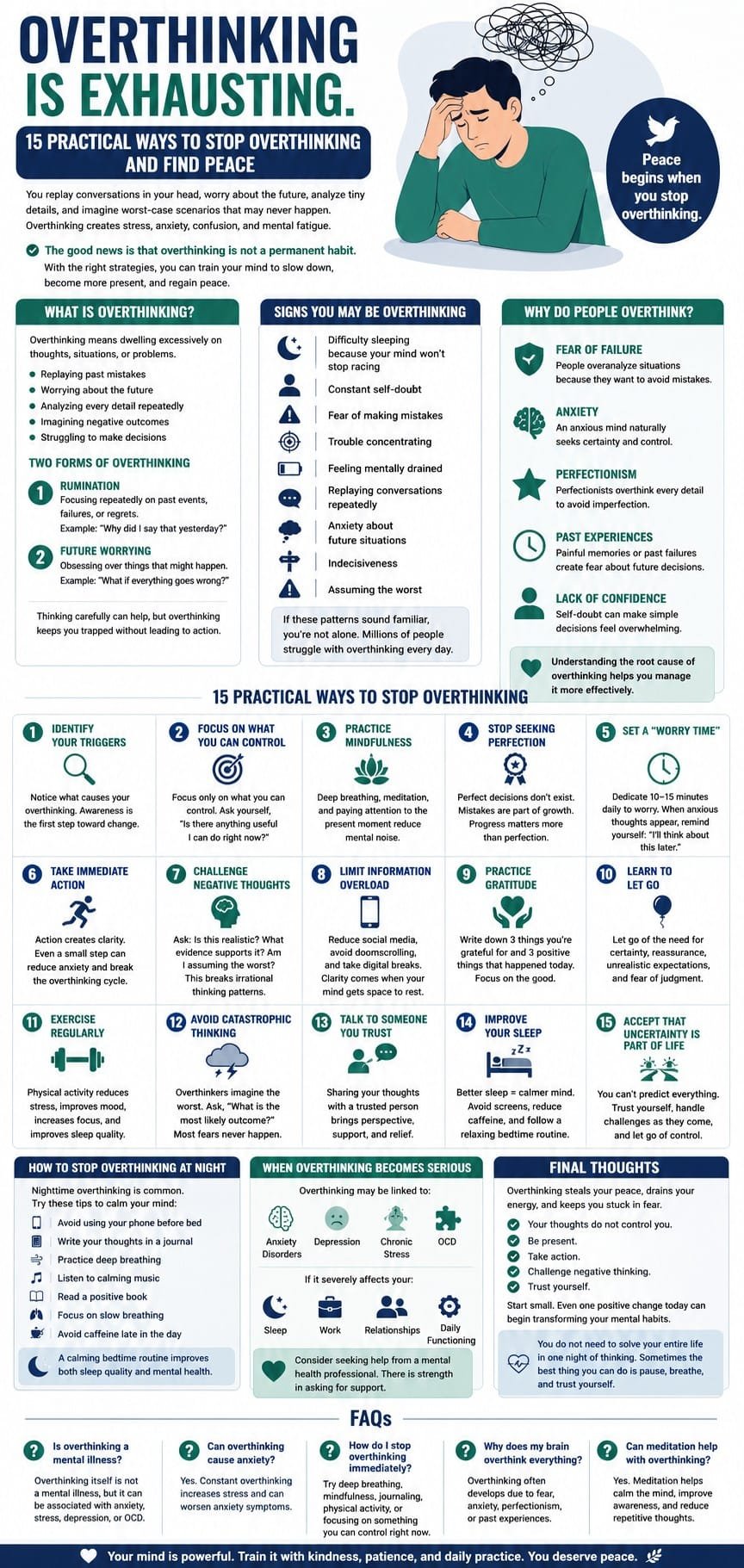
Overthinking is exhausting. The flying thoughts randomly come and go. You replay conversations in your head, worry about the future, analyze tiny details, and imagine worst-case scenarios that may never happen. Instead of solving problems, overthinking creates stress, anxiety, confusion, and mental fatigue.
The good news is that overthinking is not a permanent habit. With the right strategies, you can train your mind to slow down, become more present, and regain peace.
In this article, you’ll learn practical and effective ways to stop overthinking and enjoy a calmer, happier life.
What Is Overthinking?
Overthinking means dwelling excessively, on thoughts, situations, or problems. It often involves:
- Replaying past mistakes
- Worrying constantly about the future
- Analyzing every detail repeatedly
- Imagining negative outcomes
- Struggling to make decisions
Key Characteristics of Overthinking
Unproductive Thinking: Analyzing situations in a way that does not lead to a solution or positive outcome.
Repetitive Loops: Going over the same thoughts or scenarios multiple times.
Loss of Perspective: Magnifying minor issues until they feel overwhelming.
Analysis Paralysis: Becoming “stuck” and unable to make decisions or take action due to over-analyzing options.
There are generally two forms of overthinking:
1. Rumination
Replaying past events, conversations, failures or mistakes, often accompanied by guilt or regret.
Example:
“Why did I say that yesterday?”
2. Future Worrying
Obsessing over things that might happen. Fixating on potential negative outcomes and “what if” scenarios.
Example:
“What if everything goes wrong?”
While thinking carefully can be helpful, overthinking keeps you mentally trapped without leading to meaningful action.
Signs You May Be Overthinking
Here are some common symptoms of overthinking:
- Difficulty sleeping because your mind won’t stop racing
- Constant self-doubt
- Fear of making mistakes
- Trouble concentrating
- Feeling mentally drained
- Replaying conversations repeatedly
- Anxiety about future situations
- Indecisiveness
- Assuming the worst
If these patterns sound familiar, you’re not alone. Millions of people struggle with overthinking every day.
Why Do People Overthink?
Overthinking can develop for many reasons:
Fear of Failure
People often overanalyze situations because they want to avoid mistakes.
Anxiety
An anxious mind naturally seeks certainty and control.
Perfectionism
Perfectionists tend to overthink every detail to avoid imperfection.
Past Experiences
Painful memories or past failures can create fear about future decisions.
Lack of Confidence
Self-doubt can make simple decisions feel overwhelming.
Understanding the root cause of overthinking helps you manage it more effectively.
Is overthinking a mental illness?
Overthinking itself is not a mental health condition but a response to negative emotions.
Research suggests that rumination plays a powerful role as a risk factor for depression and anxiety. That means if you tend to overthink and get caught up in negative thoughts, it can significantly increase your chances of developing these conditions. You may have experienced this in the past: When you spend a lot of time rehashing bad memories, this ends up leading to more negative thoughts and a cynical outlook.
Overthinking can also trigger or extend a depressive episode. Likewise, depression can extend periods of rumination. If you notice a correlation between patterns of overthinking and depression, they may be contributing to each other.
If you think your negative thoughts are related to depression and want to evaluate your condition , check out: Am I depressed?
15 Practical Ways to Stop Overthinking
There’s no single method to stop overthinking. If you want to take control of your thinking patterns, get started with some of these psychiatrist-backed tips below.
1. Identify Your Triggers
Notice what causes your overthinking.
Ask yourself:
- What situations trigger my anxiety?
- Who or what increases my stress?
- When do I overthink the most?
Awareness is the first step toward change.
2. Focus on What You Can Control
Many people overthink things outside their control.
Instead of worrying endlessly, separate:
- What you can control
- What you cannot control
Put your energy only into actions you can take.
A simple question can help:
“Is there anything useful I can do right now?”
If the answer is no, let the thought go.
3. Practice Mindfulness
Mindfulness helps bring your attention back to the present moment.
Simple mindfulness exercises include:
- Deep breathing
- Observing your surroundings
- Paying attention to your senses
- Meditation
Mindfulness reduces mental noise and improves emotional balance.
4. Stop Seeking Perfection
Perfectionism fuels overthinking.
Remember:
- Perfect decisions do not exist
- Mistakes are part of growth
- Progress matters more than perfection
Done is often better than perfect.
5. Set a “Worry Time”
Instead of worrying all day, dedicate 10–15 minutes daily to think about your concerns.
When anxious thoughts appear outside that time, remind yourself:
“I’ll think about this later.”
This technique trains your brain to stop constant mental repetition.
6. Take Immediate Action
Overthinking often happens when we stay inactive.
Action creates clarity.
Even a small step can reduce anxiety:
- Send the email
- Start the project
- Make the phone call
- Write the first paragraph
Momentum weakens overthinking.
7. Challenge Negative Thoughts
Not every thought is true.
When negative thoughts appear, ask:
- Is this thought realistic?
- What evidence supports it?
- Am I assuming the worst?
- What would I tell a friend in this situation?
This helps break irrational thinking patterns.
8. Limit Information Overload
Too much information creates confusion and indecision.
Endless scrolling, excessive research, and constant comparison can intensify overthinking.
Try to:
- Reduce social media usage
- Avoid doomscrolling
- Take digital breaks
- Consume information intentionally
Mental clarity improves when your brain gets space to rest.
9. Practice Gratitude
Gratitude shifts your focus away from fear and negativity.
Every day, write down:
- 3 things you are grateful for
- 3 positive things that happened today
Gratitude trains your mind to notice positivity instead of constantly searching for problems.
10. Learn to Let Go
You cannot control everything.
Sometimes, peace comes from acceptance rather than analysis.
Let go of:
- The need for certainty
- Constant reassurance
- Unrealistic expectations
- Fear of judgment
Not every situation requires endless thinking.
11. Exercise Regularly
Physical movement reduces stress hormones and calms the mind.
Exercise helps:
- Reduce anxiety
- Improve mood
- Increase focus
- Improve sleep quality
Even a 20-minute walk can significantly reduce overthinking.
12. Avoid Catastrophic Thinking
Overthinkers often imagine extreme negative outcomes.
Ask yourself:
“What is the most likely outcome?”
Most fears never happen.
Training your mind to focus on realistic possibilities can dramatically reduce anxiety.
13. Talk to Someone You Trust
Keeping thoughts trapped inside your mind often makes them stronger.
Talking to:
- A trusted friend
- Family member
- Mentor
- Therapist
can help you gain perspective and emotional relief.
Sometimes clarity comes simply from expressing your thoughts aloud.
14. Improve Your Sleep
Sleep deprivation worsens anxiety and racing thoughts.
To sleep better:
- Avoid screens before bed
- Reduce caffeine intake
- Maintain a consistent sleep schedule
- Practice relaxation techniques at night
A rested mind handles stress much better.
15. Accept That Uncertainty Is Part of Life
One of the biggest causes of overthinking is the desire to predict everything.
But life will always contain uncertainty.
Trying to control every outcome only creates stress.
Peace begins when you accept:
- You cannot predict everything
- You can handle challenges as they come
- Uncertainty is normal
Confidence grows when you trust yourself instead of fearing the unknown.
How to Stop Overthinking at Night
Nighttime overthinking is extremely common because the mind becomes more active in silence.
Here are quick tips to calm your mind before sleep:
- Avoid using your phone before bed
- Write your thoughts in a journal
- Practice deep breathing
- Listen to calming music
- Read a positive book
- Focus on slow breathing
- Avoid caffeine late in the day
Creating a calming bedtime routine can improve both sleep and mental health.
When Overthinking Becomes Serious
Sometimes overthinking may be linked to:
- Anxiety disorders
- Depression
- Chronic stress
- OCD
If overthinking severely affects your:
- Sleep
- Work
- Relationships
- Daily functioning
consider seeking help from a mental health professional.
There is strength in asking for support.
Final Thoughts
Overthinking steals your peace, drains your energy, and keeps you stuck in fear.
But your thoughts do not control you.
By practicing mindfulness, taking action, challenging negative thinking, and focusing on the present moment, you can gradually train your mind to become calmer and more balanced.
Start small.
Even one positive change today can begin transforming your mental habits.
Remember:
You do not need to solve your entire life in one night of thinking.
Sometimes the best thing you can do is pause, breathe, and trust yourself.
FAQs
Is overthinking a mental illness?
Overthinking itself is not a mental illness, but it can be associated with anxiety, stress, depression, or OCD.
Can overthinking cause anxiety?
Yes. Constant overthinking increases stress and can worsen anxiety symptoms.
How do I stop overthinking immediately?
Try deep breathing, mindfulness, journaling, physical activity, or focusing on something you can control right now.
Why does my brain overthink everything?
Overthinking often develops due to fear, anxiety, perfectionism, or past experiences.
Can meditation help with overthinking?
Yes. Meditation helps calm the mind, improve awareness, and reduce repetitive thoughts.